It's failing because we're optimising the wrong unit.
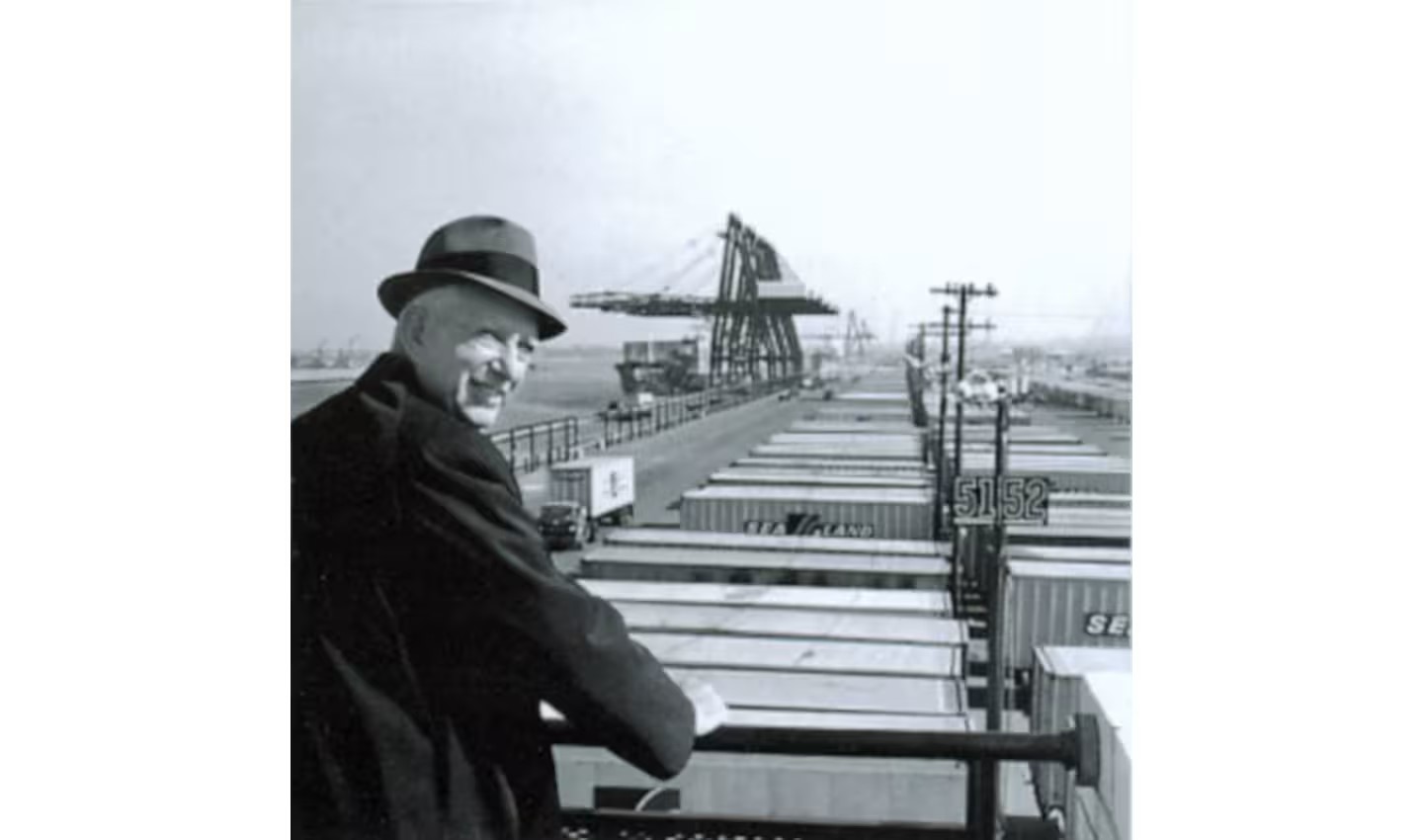
Global trade didn't scale because ships improved. It scaled because the industry agreed on a box.
In 1956, Malcolm McLean didn't build a better ship. He aligned an ecosystem — ships, cranes, rail and trucks — around a standard. Once that happened, scale became inevitable.
Urban freight is approaching a similar moment.
Cargo bikes work. The emissions case is clear. The economics are improving. Yet adoption in most UK cities is still in the low single digits.
Why?
Because the system isn't designed to scale. We've been optimising the wrong thing. Urban logistics is built around vehicles. That's the mistake.
Today, goods are broken down, re-sorted and re-packed at every stage of the journey. That creates friction, cost, and dependency on fixed infrastructure. Containerisation removes that. Infrastructure becomes lighter. Transfers become faster. Operations become scalable.
But this is still early.
Containerised urban logistics is a tiny part of the market. Most deployments are still pilot-scale. No large-scale intermodal container networks exist yet. But the direction is clear. The model works. What it hasn't proven yet is scale.
Fragmentation is the barrier. Different formats, systems, compatibility and tracking create systemic obstacles. At small scale, you work around this. At city scale, it breaks you.
Shipping solved this in one way: agreement.
With it, it becomes infrastructure.
This is not yet a scaled market. It's an architectural moment.
The next phase is not more limited, short-term pilots. It's coordination.
Urban freight doesn't need another vehicle innovation.
It needs its McLean moment.